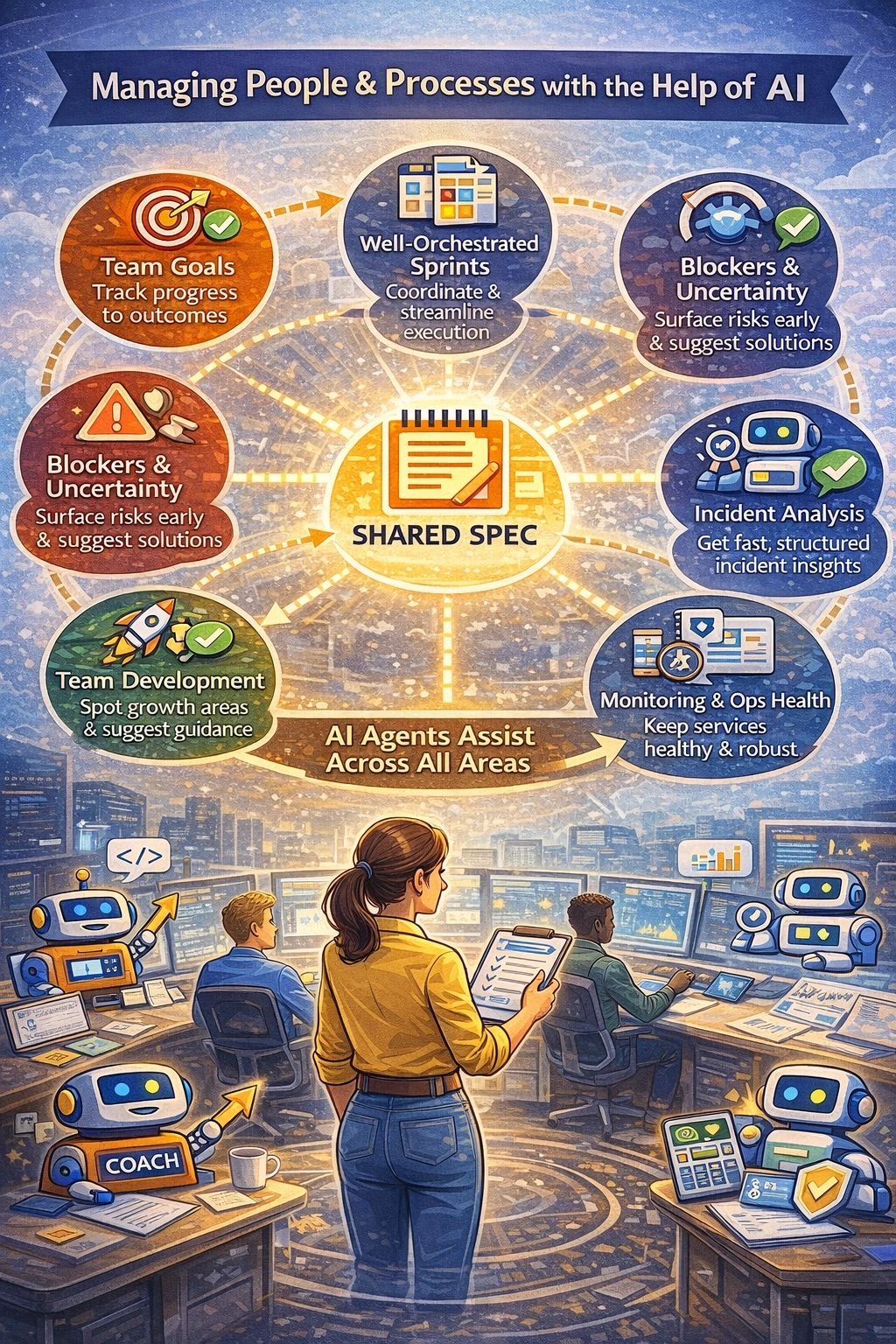
AI doesn’t just change how software is written. It changes how engineering is observed, guided, and grown. When execution accelerates through AI agents, management practices become the critical bottleneck.
The Manager’s Hidden Problem
Traditional engineering managers spend time collecting signals (PRs, incidents, reviews), synthesizing them into mental models, and converting those models into feedback. This worked when output was scarce and code was expensive. AI breaks these assumptions by making code cheap, fast, and parallel—resulting in:
- Raw activity explosion
- Meaningless surface-level productivity metrics
- Increased bias and noise
Managers must shift from asking “Am I seeing everything?” to “Am I interpreting the right patterns?”
The Engineering Manager Insight Agent
What It Does
Aggregates Existing Artifacts (without new surveillance):
- PR metadata and discussion depth
- Test and CI outcomes
- Deployment and rollback events
- Incident follow-ups
- Documentation changes
- Patterns in agent usage
Synthesizes Trends Over Time (as narrative summaries):
- Weekly or monthly deltas
- Changes in review depth, not PR counts
- Shifts in incident patterns, not isolated failures
- Improvements in documentation discipline
Maps Signals to Growth Dimensions:
- Clarity of intent
- Transparency of decisions
- Delegation skill (human + AI)
- System impact awareness
The agent surfaces evidence, not conclusions.
What It Must Never Do
The agent must never:
- Score individuals
- Rank engineers
- Generate performance reviews
- Recommend promotions or terminations
- Operate without team transparency
The moment engineers feel observed rather than supported, trust collapses—and adoption fails.
How Managers Must Adapt
In 1:1s:
- Validate patterns with the engineer
- Ask for context, not justification
- Focus on deltas over time
In Team Settings:
- Discuss system-level trends
- Normalize learning from patterns
- Adjust practices collectively
In Calibration:
- Use summaries as evidence
- Combine with peer feedback
- Keep final judgment human
Critical Rule: If an engineer wouldn’t recognize themselves in the summary, the system is wrong.
The New Manager Skillset
Great managers are now defined by:
- How well they interpret signals
- How clearly they separate noise from insight
- How intentionally they shape growth
Managers who adapt gain calmer teams, fairer feedback, clearer promotion discussions, and less emotional load in 1:1s. Those who don’t default to outdated metrics, mistake volume for impact, and unintentionally burn trust.
The Bottom Line
AI makes output cheap, activity abundant, and noise unavoidable. Managers who adopt new practices—supported by synthesis tools—don’t lose control; they regain focus. And that’s what teams feel most.