Book at a glance.
Introduction: The Operating Model
Improve the system around engineering, starting with its current constraint.
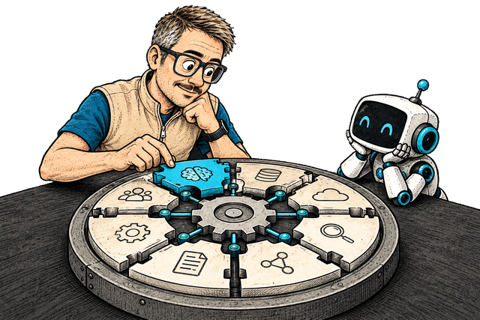
Build and govern
Development, organization, context, and communication move the work.
Learn and adapt
Leadership, culture, learning, and economics make improvement last.
Choose an entry point
Trace one real delivery problem before changing everything.
Put it to work
Can you name the constraint, its owner, and an observable outcome?
Keep the distinction
The eight dimensions interact. They are not a maturity ladder or a required rollout sequence.
One Change Through the System
Follow one change through intent, context, coordination, and evidence.
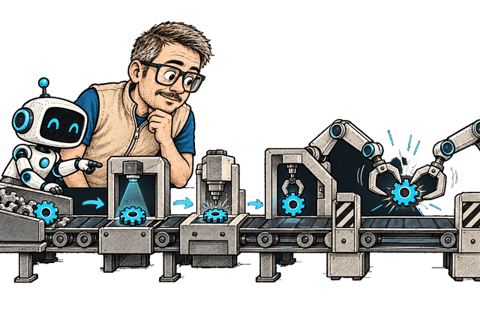
Frame the work
ORD-42 names the task, ADR-17 the decision, CTX-42 the context.
Coordinate
CHANGE-42 carries the cross-team commitment and authority boundary.
Expose the failure
EVAL-42 catches a concurrency failure; the fix needs fresh evidence.
Put it to work
Can you follow one requirement through the decision, implementation, and failure evidence?
Keep the distinction
Northstar is a fictional sandbox case. It is not a production payments result or external validation.
Why Software Engineering Changes with AI
Faster implementation changes where engineering attention creates value.
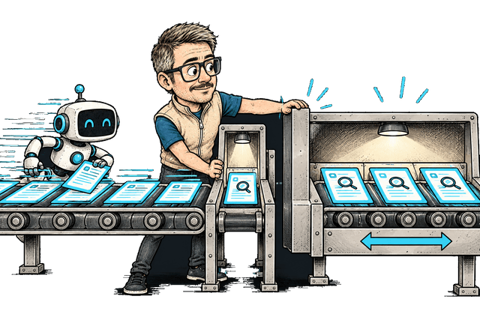
Observe acceleration
Which tasks actually got faster in your environment?
Find the new constraint
Inspect context, review, integration, and decision queues.
Redesign for outcomes
Reusable judgment; measure accepted results, not output.
Put it to work
Where is the time saved in coding being spent now?
Keep the distinction
Local coding speed is not a universal estimate of end-to-end productivity.
What Is the AI SDLC?
Connect the full path from intent to operational learning.
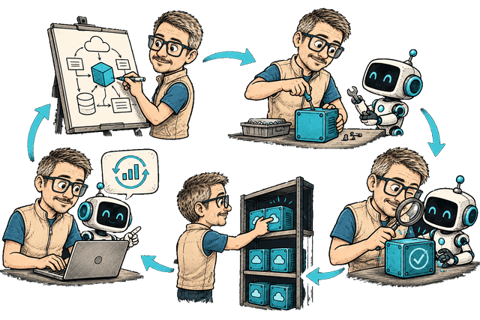
Frame
Intent → context → specification: what should happen, and within which limits.
Deliver
Implementation → verification → release: evidence before wider exposure.
Learn
Operation → learning: outcomes feed context and future work.
Put it to work
Which handoff breaks the connection between intent and a trusted outcome?
Keep the distinction
The goal is reliable outcomes. Maximum autonomy is not itself the objective.
From Agile to AI-Native Development
Keep feedback and adaptation while redesigning the mechanics of delivery.

Keep
Small increments, visible outcomes, feedback, and adaptation.
Rework
Ceremonies and handoffs that only move status or restate intent.
Make explicit
Executable intent, bounded authority, evidence, and outcome review.
Put it to work
Does the process shorten the path from intent to trusted feedback?
Keep the distinction
Faster execution does not remove the need to resolve priorities and acceptance criteria.
Async by Default
Make coordination a protocol with visible state.
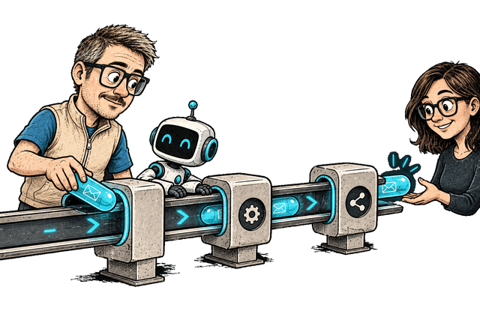
Route
Name the owner, the decision needed, and a response window.
Acknowledge
Make receipt, acceptance, and escalation explicit.
Verify closure
Record the decision and evidence the commitment was met.
Put it to work
Can a reader tell who owes the next action without asking in chat?
Keep the distinction
Silence is not consent. Routing a request does not grant authority to approve it.
Decision Records
Preserve why a decision made sense, not just what was decided.
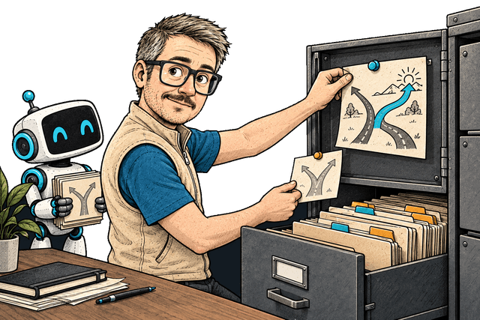
At commitment
Context, alternatives, tradeoffs, scope, and the decision owner.
During delivery
Link implementation and evidence to the decision.
At reconsideration
Apply revisit conditions; supersede without erasing history.
Put it to work
Could a future team distinguish a deliberate tradeoff from an accidental constraint?
Keep the distinction
A decision record is not permanently valid just because its rationale was once sound.
Context over Meetings
Move shared state into durable context so synchronous time can resolve uncertainty.
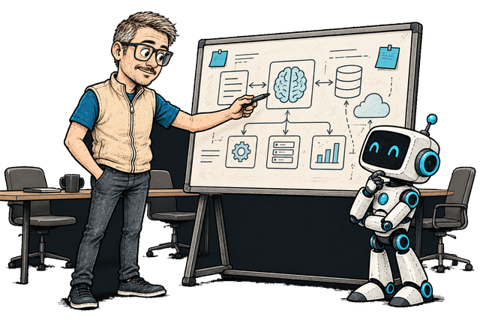
Durable artifact
Background, ownership, decisions, and the next action, in writing.
Synchronous discussion
Ambiguity, disagreement, and work that needs live interaction.
Afterward
Update the artifact with the decision and what stays uncertain.
Put it to work
Did blocked work and repeated explanation decrease?
Keep the distinction
Fewer meetings alone is not evidence of better coordination.
Hierarchical Context
Separate governing authority from the graph of related knowledge.
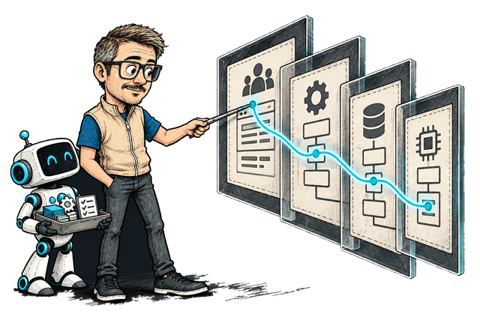
Authority hierarchy
Enterprise → organization → team → service sets ownership and scope.
Task bundle
Select permitted revisions; record where each constraint comes from.
Conflict boundary
Escalate incompatible rules or get an owned exception.
Put it to work
Can the task identify which rule governs and who may authorize an exception?
Keep the distinction
This four-level hierarchy is a design proposal. Retrieval relevance is not policy authority.
Context as Infrastructure
Treat usable knowledge as maintained infrastructure.

Ownership
Owner, scope, revision, and freshness for important context.
Delivery
Retrieve relevant, permitted information for the actual task.
Health
Check retrieval quality, staleness, access failures, and downstream mistakes.
Put it to work
Can you detect when the right document exists but the task receives the wrong context?
Keep the distinction
More indexed documents do not establish usable, authoritative, or current context.
What Async Can't Teach You
Written knowledge needs practice and feedback to become judgment.
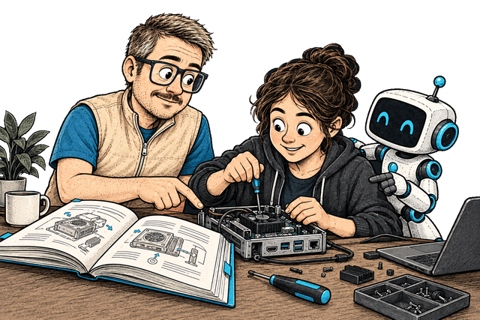
Capture reasoning
Show how experts frame ambiguity and choose between options.
Practice decisions
Real choices with feedback, supported to fit the task.
Check transfer
Apply the reasoning in a different situation.
Put it to work
What can the learner now decide independently that they could not decide before?
Keep the distinction
Documentation availability and AI-assisted completion are not substitutes for checking understanding.
Thinking Out Loud
Expose decision reasoning so others can inspect and practice it.
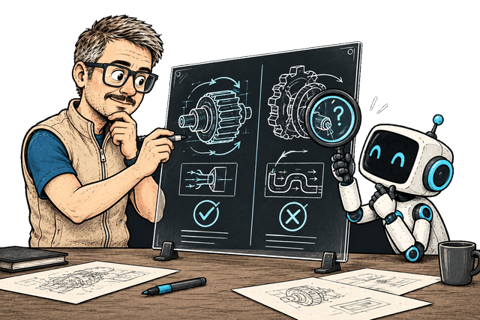
Observe
Separate what happened from your hypothesis about why.
Compare
Options, tradeoffs, uncertainty, and the evidence behind the choice.
Revise
Say what changed your mind; invite challenge.
Put it to work
Can a colleague reconstruct why the decision changed?
Keep the distinction
Use a lightweight reasoning trace. Do not turn every tentative thought into permanent guidance.
Learning Streams
Deliver relevant, maintained learning instead of an accumulating feed.
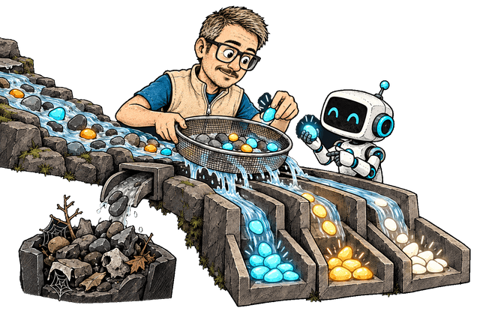
Capture and curate
Keep context, consent, and uncertainty; separate observation from guidance.
Deliver
Route lessons to the roles and tasks that can act.
Refresh or retire
Revise stale guidance; remove what no longer helps.
Put it to work
Who needs this lesson next, and how will you know it helped?
Keep the distinction
Raw traces and speculative ideas should not silently become organizational policy.
Mentorship in AI-Native Teams
Develop transferable judgment through progressively owned work.
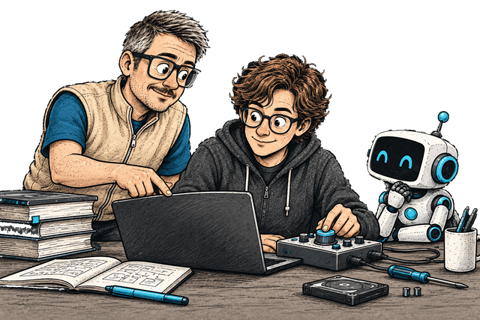
Observe and predict
See expert reasoning; anticipate the next decision.
Prepare and challenge
Propose options, inspect evidence, challenge assumptions.
Own and transfer
Take on more; succeed on a new task without the scaffolding.
Put it to work
Can the learner explain and apply the reasoning independently?
Keep the distinction
More AI-assisted output does not establish learning. AI assistance does not imply inevitable skill loss either.
The Engineering Leadership Stack
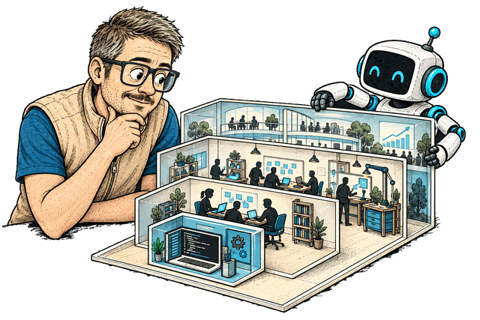
Make system design responsibilities explicit at every level.
Software and systems
Engineers and staff engineers design technical systems.
Teams and operations
Managers and directors shape capability and operating systems.
Evolution
VP-level leaders shape how the systems adapt over time.
Put it to work
Who owns improving the system in which each role works?
Keep the distinction
These are overlapping design responsibilities, not a mandated org chart or headcount forecast.
Administrative Gravity
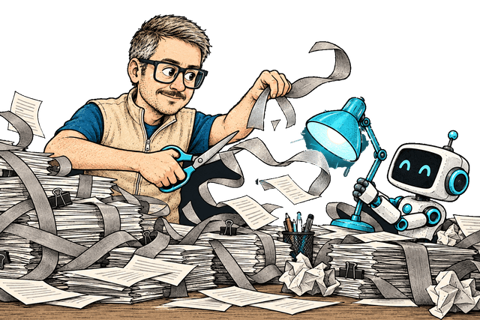
Recover attention by removing low-value administration before automating it.
Inventory
Find recurring status collection, routing, and information transport.
Redesign
Eliminate unneeded work; let AI prepare the routine rest.
Reinvest
Spend recovered attention on decisions, coaching, and improvement.
Put it to work
Did the recurring burden shrink, or did you only generate more reports?
Keep the distinction
Information preparation can be delegated. Accountability for consequential judgment remains explicit.
Operating the Improvement Backlog
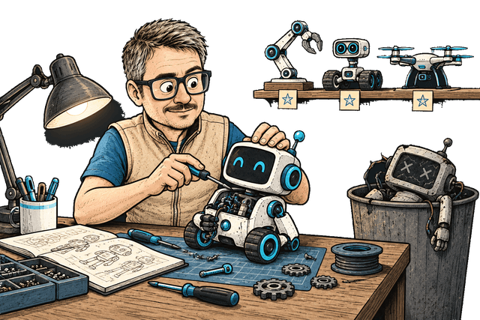
Give operating improvements the ownership and lifecycle of product work.
Discover friction
Treat colleagues as users; find repeated operating problems.
Fund a pilot
A hypothesis, an owner, and a measurable outcome.
Maintain or retire
Inspect adoption and results; fund upkeep or remove it.
Put it to work
Which operating improvement has an owner, budget, and next review?
Keep the distinction
An improvement backlog without capacity and maintenance becomes another list of aspirations.
Span of Improvement
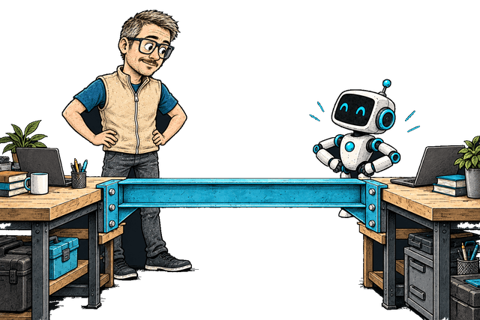
Assess leadership by durable improvements to the system.
Baseline
Name the outcome and measure current performance.
Improve across boundaries
Address the constraint even across reporting lines.
Make it persist
Leave maintained capability, clear ownership, and evidence.
Put it to work
Does the improvement continue when its original sponsor steps away?
Keep the distinction
Span of improvement is a lens for judgment, not a universal score or individual leaderboard.
The AI-Executable Ticket
Make the ticket a bounded execution contract.
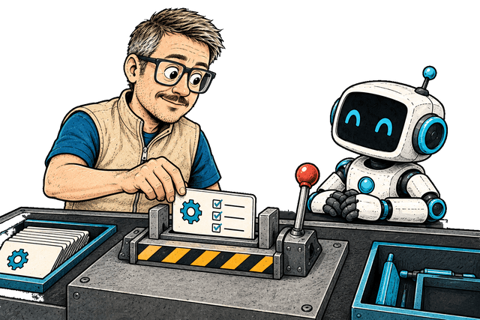
Intent
Outcome, acceptance examples, non-goals, and open questions.
Boundary
Context revisions, permitted actions, and stop conditions.
Evidence
Verification, recovery, and the decision before authority expands.
Put it to work
Could an agent proceed without inventing a requirement or a permission?
Keep the distinction
A longer ticket is not necessarily a better contract. Surface uncertainty rather than hiding it in prose.
Agentic Development
Delegate a bounded outcome with evidence, not an open-ended instruction.
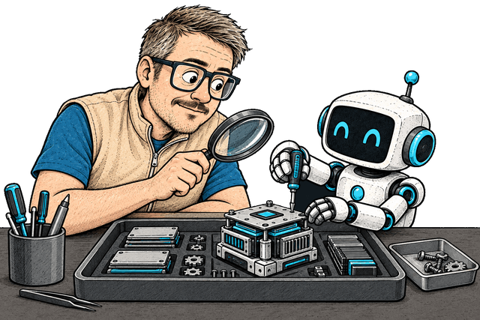
Contract
Outcome, context, permissions, acceptance criteria, and stop conditions.
Execute visibly
Expose actions and assumptions; scale approval to risk.
Verify
Review outcome evidence and recovery, not just a clean build.
Put it to work
Would another engineer know what success means and when the agent must stop?
Keep the distinction
A convincing narrative is not evidence that the required behavior works.
Multi-Agent Engineering
Parallel work pays only when boundaries and integration are deliberate.
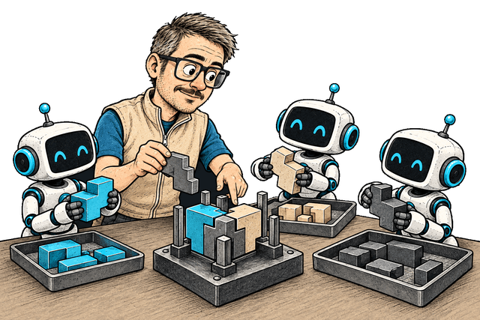
Partition
Stable contracts, isolated scope, ownership, and shared constraints.
Execute
Independent work with visible assumptions; inspect disagreements.
Integrate
Test the combined result; count coordination and review.
Put it to work
Did parallelism reduce elapsed time without increasing total failure and integration cost?
Keep the distinction
Using different models does not guarantee independent reasoning or independent errors.
Evaluation and Release Evidence
Define the evidence for release before relying on generated output.
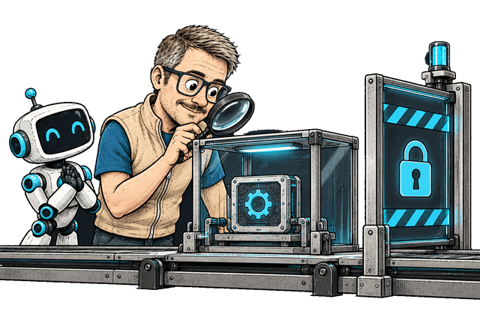
Define the oracle
Acceptable behavior, representative tasks, failure cases, repeated trials.
Bind the evidence
Record the exact revision, model, harness, and environment.
Decide release
Weigh failures, limits, ownership, and rollback with passing checks.
Put it to work
Does the release packet support this revision and this risk class?
Keep the distinction
A benchmark score or passing test suite does not authorize every kind of production change.
Human in the Loop
Put human judgment at consequential authority boundaries.
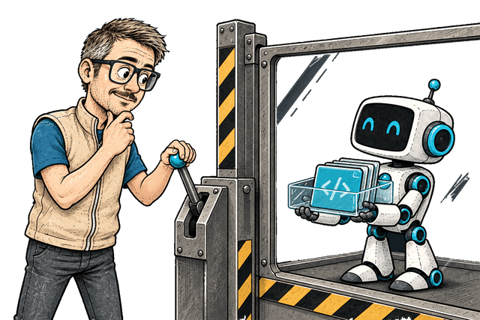
Classify risk
Decide which actions run automatically and which need a decision.
Prepare the packet
Intent, evidence, uncertainty, affected scope, and recovery options.
Enforce the decision
Approve, return, or stop through real permission boundaries.
Put it to work
Can the reviewer make a meaningful decision and can the system enforce it?
Keep the distinction
Frequent approval prompts can create fatigue without providing effective control.
Engineering Economics
Measure the cost of accepted outcomes across the whole delivery system.
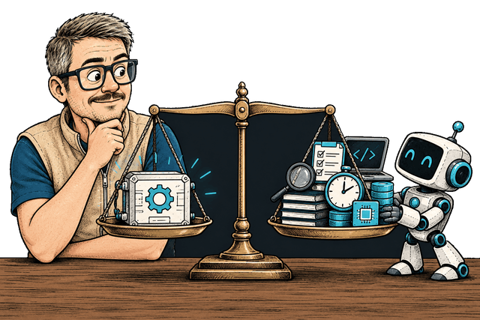
Full cost
Implementation, review, rework, compute, and maintenance.
Current constraint
Does faster coding move waiting into verification or integration?
Decision value
Bounded experiments test whether expansion is justified.
Put it to work
Did cost per accepted change improve without shifting hidden costs downstream?
Keep the distinction
Recovered capacity is not automatically cash savings. The chapter’s worked numbers are illustrative.
Autonomous SDLC and Self-Learning Pipelines
Retain useful learning while keeping the pipeline’s authority bounded.
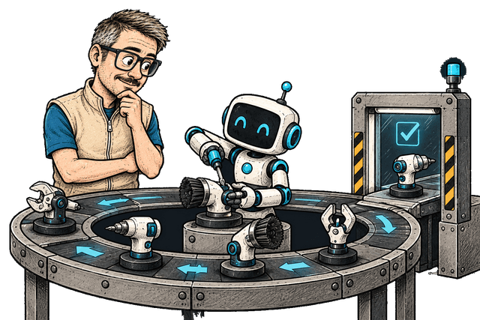
Execute
Run with a versioned model, harness, context, and permissions.
Evaluate
Compare outcomes with acceptance criteria and operational evidence.
Retain
Promote proven improvements through controlled review.
Put it to work
What changed, what evidence supports it, and how can it be rolled back?
Keep the distinction
Workflow learning does not necessarily update model weights. It must not weaken its own controls.
The Organization as a Product
Design organizational changes around the people who must use them.
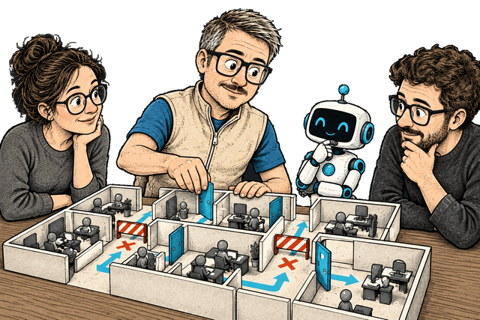
Understand use
Observe friction in structure, culture, tools, and policy.
Test a hypothesis
An owner, an expected improvement, and a pilot.
Review the experience
Measure adoption; keep local adaptation within shared rules.
Put it to work
Does this change improve daily work for its intended users?
Keep the distinction
Changing a tool alone may leave the incentives and decision rights causing the problem untouched.
Continuous Learning
Learning counts when evidence changes future work.
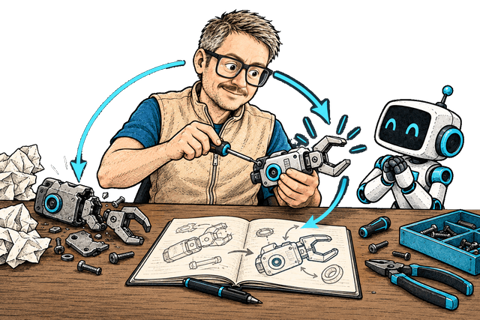
Observe
Capture a real outcome, failure, or successful adaptation.
Change
Turn it into a maintained practice, tool, context, or check.
Verify adoption
Route it to the people who need it; inspect the effect.
Put it to work
What will the next team do differently because of this lesson?
Keep the distinction
A retrospective note or training attendance does not establish changed behavior.
Culture in Async Organizations
Culture becomes credible through everyday operating behavior.
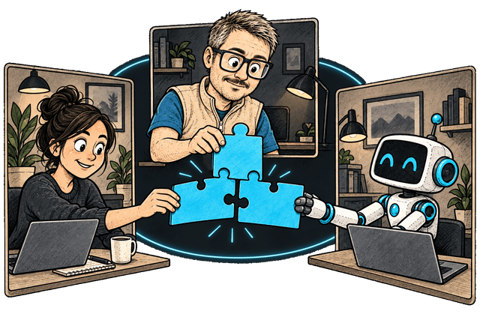
Communication
Visible uncertainty, commitments, response expectations, and disagreement.
Trust
Reliable shared state and commitments that are kept.
Reinforcement
Incentives, agent instructions, and shared time aligned with values.
Put it to work
What behavior would a newcomer infer from the last difficult decision?
Keep the distinction
Written values do not compensate for operating incentives that reward the opposite.
Organizational Operating Systems
Design the interfaces through which an organization acts and learns.
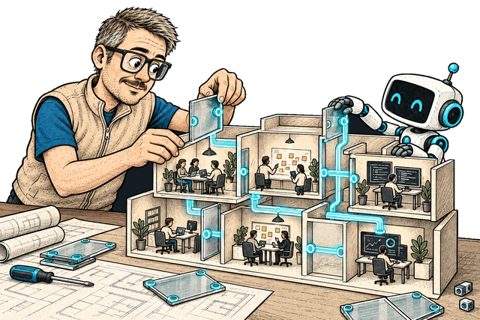
Intent and context
Goals and governing information, legible where work happens.
Work and authority
Interfaces, ownership, and agent identity and permissions.
Learning and stewardship
Shared rules with room for local improvement.
Put it to work
Where does work lose its owner, context, or permission to proceed?
Keep the distinction
A shared operating model should not require every team to implement every practice identically.
Applying the Book: From Operating Model to Company Playbook
Combine the reference model with company evidence to make a local playbook.

Establish readiness
Separate available evidence, access limits, and retrieval failures.
Compare options
Map friction to the model, including smaller experiments or deferral.
Run and reassess
Assign owners, dependencies, outcome measures, and a review date.
Put it to work
Can each proposed change be traced to company evidence and an accountable owner?
Keep the distinction
Missing evidence is uncertainty, not proof that a capability does not exist.
Looking Ahead
Prepare for stronger systems without treating one future as inevitable.
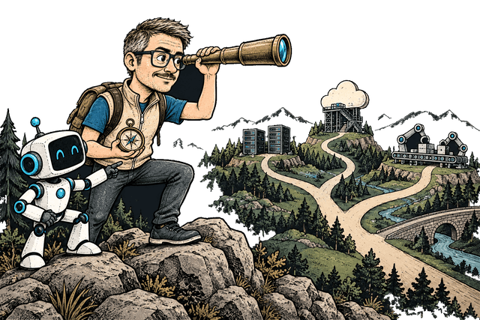
Watch capability
Models together with their tools, harnesses, and conditions.
Track trust
Time to trusted output; cost of verification and recovery.
Preserve options
Conditional scenarios and reversible changes to authority.
Put it to work
What observation would cause you to change the plan?
Keep the distinction
Capability growth is not a universal forecast for adoption speed, staffing, or job preservation.
Recursive Self-Improvement and Organizational Change
Distinguish improving work from improving the mechanism that improves work.
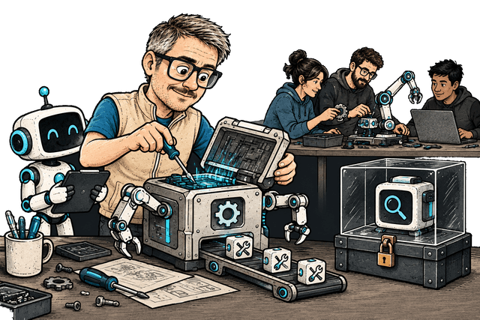
Output and workflow
Refine an answer, tool, context bundle, or delivery process.
Improvement mechanism
Change how improvements are proposed and tested; protect evaluation.
Organizational adaptation
Decision rights, skills, incentives, and trust, shown by adoption evidence.
Put it to work
Name the changed layer, protected evaluator, adoption owner, and rollback condition.
Keep the distinction
Workflow improvement is not proof of recursive model improvement or exponential company transformation.